The method
Cognitive therapy — changing what drives you.
Cognitive therapy, also called cognitive behavioural therapy, is used here to treat the cause of illness and difficult life situations.
“The primary aim of cognitive therapy is to change your own thoughts and behaviour where you experience them as unhelpful, draining and/or demanding. The secondary aim is to change how you experience and interpret other people's behaviour where it feels hard to relate to.
The method can be used for you alone, for couples, or for families and children. It covers every arena of your daily life — private life, work, leisure, sport, sexuality and social life.
For psychological problems, chronic fatigue and other physical conditions, cognitive techniques have proven well suited to achieving lasting results and change.
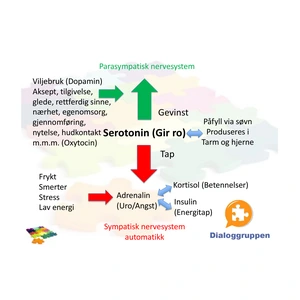
As cognition improves — thought and action become more helpful and you save energy — it has positive effects on the body's endocrine system. Better balance there affects our overall health in a positive direction.
We offer third-party treatment, meaning we help a patient by working with their next of kin — for example, children through their parents.
We offer treatment for the following areas and conditions, and similar
- 01Low energy, fatigue and chronic tiredness/ME
- 02Low mood and depression
- 03Anxiety, phobias and panic disorder
- 04Post-traumatic and chronic conditions after abuse, trauma and accidents
- 05Pain syndromes and chronic pain
- 06Aggression and narcissism
- 07Relationship problems and destructive communication
- 08Low self-esteem after bullying and psychological abuse
- 09OCD and mental noise
- 10Your relationship with food and drink
- 11Substance problems
- 12Psychosomatic conditions
- 13Autoimmune conditions
- 14Adoption and cognitive challenges
- 15Power techniques and manipulative communication
- 16School absence, bullying and challenges for children and young people
- 17Conflicts at work and in private life
The charts we use
The tools from the therapy room — open to everyone.
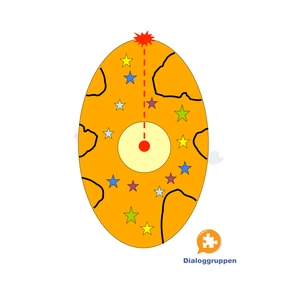
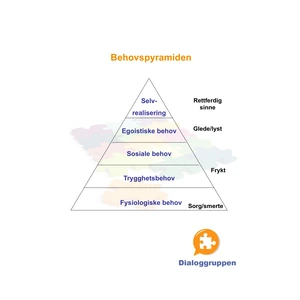
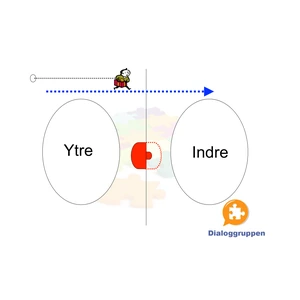
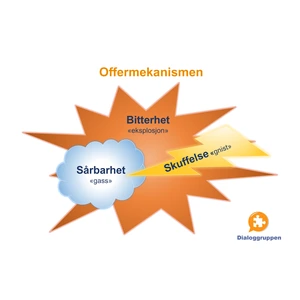
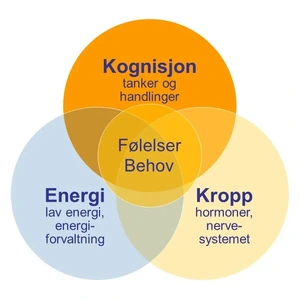
These charts are used in therapy sessions (in Norwegian). Download them as PDFs to see how the method is built.
About psychosynthesis
“If you want to change your life, we can show you how to free your own will”
A tool for human development
A human being is an interplay of body, soul, intellect and feelings. By becoming aware of these elements in ourselves and how they affect our daily life, we are able to stand safer and stronger — alone and with others. Knowing how your own brain works is fundamentally important.
Psychosynthesis — the psychology of will
We have free will. Whether and how we use it is important to be aware of. Psychosynthesis is a practical psychology built on traditional depth psychology, humanistic, existential and transpersonal psychology. It bridges Western focus on action and Eastern philosophy.
Activating each person's own potential is central. The human being is seen as a whole. Energy thieves in daily life can be uncovered and removed with this method. Psychosynthesis holds no fixed definitions of right and wrong — each person is free to choose the direction of their own process.
The first step
Does this sound familiar? Let's talk.
Several of our therapists offer a free, no-obligation first conversation. Feel free to send a text message — that way you are sure to get a reply.
